You’re not naive. You’ve seen the Rolex-wearing guys promising €100K next month and you’ve scrolled past every one. But that doesn’t fix the problem you’re actually facing: another year of opening the laptop, getting overwhelmed, and closing it again — with your idea no closer to real than it was twelve months ago.
StartupCards is a 41-card deck that walks you through the same questions Shark Tank investors ask — so you can finally start moving forward, instead of spending another year stuck.
See how it works — 30-day guarantee

I’m Ruth Cremer. Mathematician (RWTH Aachen), former VC at one of Europe’s most active seed funds, and for the last 9 years, the official advisor on Die Höhle der Löwen — Germany’s Shark Tank. I prepare every founder before they pitch. I do their final run-through on recording day. I sit with them on last-minute fixes, negotiation tactics, and the moment of nerves before they walk on stage.
After 9 years and over 1,000 founders advised — across every industry and almost every business model you can think of — the ones who built something real weren’t the most charismatic. They didn’t have the smoothest delivery. They weren’t the loudest in the room. They were the ones who knew exactly why their business worked, because they’d answered the right questions in the right order, before they walked into the room.
The ones whose businesses fell apart? They’d skipped them.
StartupCards is those questions. In that order.
You’re not lazy. You’re not unmotivated. You’re not “missing the entrepreneurial gene.” You’ve sat down to work on this idea more times than you can count.
But every time you do, the same thing happens. You open the laptop “just to look at one thing.” Two hours later: fourteen tabs, half a business plan, three saved YouTube videos, and that quiet sinking feeling. You close it. You’ll try again tomorrow.
“This will never happen if I go on like this.”
That’s the thought, isn’t it? You’ve had it at 11pm with a closed laptop. You’ve had it on Sunday evenings looking at the week ahead. You’ve had it after every conversation with a friend who asked “so how’s the business going?” and you didn’t have an answer.
Here’s what’s actually happening: you’re trying to answer infinite questions in no particular order. Should you start with the target group? The product? The pricing? Should you research competitors first or write a business plan? Should you quit your job? Validate the idea? Build the thing first?
Every founder course gives you a different answer. ChatGPT gives you whatever you ask it — but you don’t even know what to ask. So you keep researching, keep planning, keep reading. And the year goes by.
Look back at the version of you from twelve months ago. The one who had the same idea you have now. The one who thought “next month I’ll really start.”
That version is you. And nothing has changed.
Now look forward twelve months. If nothing changes, you’ll be the same again — still telling yourself you’ll start next month. Still opening the laptop and closing it. Still answering “so how’s the business going?” with the same vague half-sentences.
And here’s what’s harder to think about: it isn’t just twelve months of feeling stuck.
It’s another year of money quietly going out — the books, the tools, the events, the AI subscriptions, the prototyping costs, the domain names you bought “just in case” — without a single euro coming back in. It’s another year at a job you’ve outgrown, watching opportunities pass because part of you already mentally left. It’s another year of life getting more expensive while your income stays exactly the same — and your idea, the thing that was supposed to change that, doesn’t move an inch.
The founders who built something real and the founders whose ideas quietly died — they started in roughly the same place. Same self-doubt. Same overwhelm. Same long list of unanswered questions. The difference wasn’t talent or money. It was whether they had a sequence to follow.
The cards are that sequence.
Not a course. Not another canvas. Not a “system” promising to fix everything in 30 days.
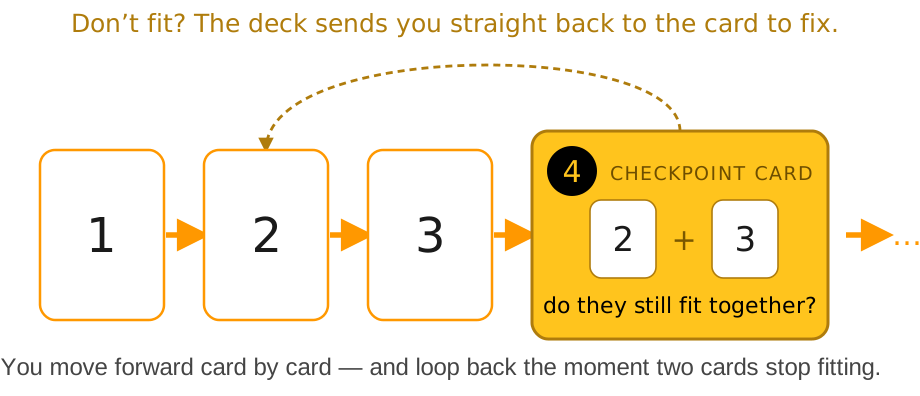
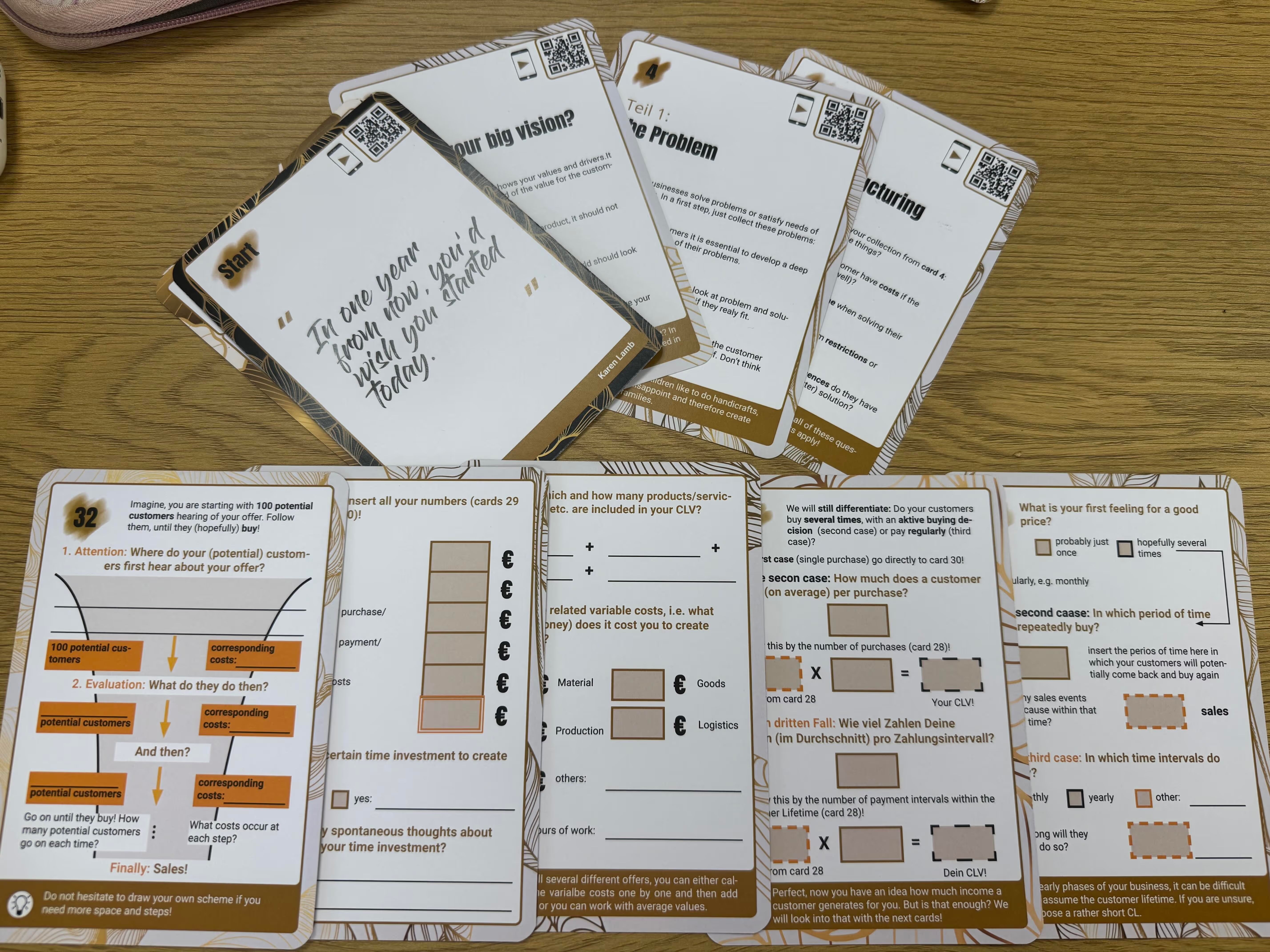
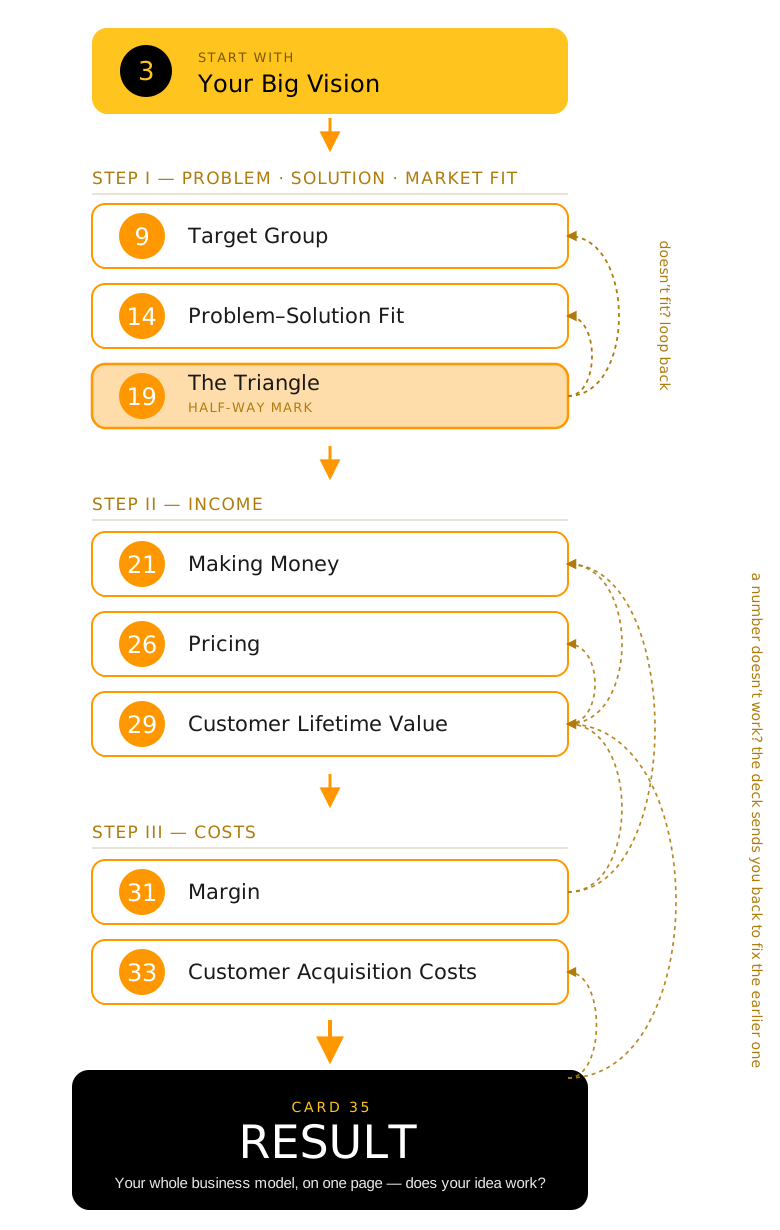
A physical deck of 41 cards. Each one is a single question — in the order you need to answer it. Card 1 leads to Card 2. Card 2 leads to Card 3. And every few cards, the deck stops and asks: “Does what you just figured out still fit what you decided three cards ago? If not, here’s exactly which card to go back to.”
That’s the part most founder tools miss. The forward sequence is important — but the loops back are what make a real business model.
You already know how this normally goes. You define your target group. You feel good about it. You move on to your solution. Halfway through, you realise the target group you picked can’t actually use the solution you’re describing. Or your numbers won’t work for the price they’ll accept. So you go back. Then something else doesn’t fit. Then you give up.
The cards are built around this exact reality. Every phase has explicit checkpoints — moments where the deck says “before you go on, check this against what you said on Card 5” or “if your numbers don’t work here, go back to your target group on Card 9.”
The Triangle in the middle of the deck — Target Group / Problem / Solution — is the most important one. You only move past it when all three fit together. Most founders never realise they don’t until they’ve already built the wrong thing. The cards force the check before you spend a year on the wrong pieces.
So when you finish, you don’t have a target group document, a solution document, and a numbers document sitting next to each other hoping they connect. You have a business model where every part fits with every other part — because the deck wouldn’t let you move on until it did.
When you reach the last card, you don’t have a thicker Notion doc or another half-written business plan.
You have a complete, internally-consistent business model — one you’ve tested against the same questions Shark Tank investors will ask, the same questions VCs ask, the same questions every founder I’ve worked with answered before they walked into their first real conversation about money.
And if your idea doesn’t survive the cards? That’s a real answer too. It means you’ve saved yourself two years and most of your savings — and you can now decide what to do next with clarity instead of confusion.
See the three versionsMost founder courses teach you one thing — how the creator generates leads, how they write ads, how they build their funnel. That’s useful if you already have a business and need to improve one slice of it. But you don’t. You’re trying to figure out if the whole thing even works. Buying a course on the “perfect launch funnel” when you don’t yet have a target group, a tested solution, or numbers that add up is like buying winter tires before you’ve decided whether you’re getting a car. The cards work on the whole business — and force every piece to fit with every other.
AI tools like ChatGPT are useful — I use them every day. But there’s a problem most founders don’t realise until it’s too late: AI sounds equally confident whether it’s right or completely making things up. In business modeling, where you don’t know enough yet to spot the wrong answers, that confidence is dangerous. You can “validate” a target group based on numbers AI hallucinated, and only find out a year later when nobody’s buying. AI is brilliant at answering the questions you ask it. It can’t tell you which questions you’re not asking — and it can’t tell you when its answer is wrong.
You’ve been telling yourself you’ll figure this out with free content for months. Maybe years. Look at what that “free” year has actually cost you — the books, the tools, the AI subscriptions, the events, the courses you abandoned. Add it up. Now add the year of your life that went with it. €179 once isn’t expensive. The “free” version is what’s been bankrupting you, in time and in pieces.
“I like it because it brings you back to zero and starts structuring your thoughts and plans. The exercises are short and clear, and I feel like I am progressing.”
“The videos and on-screen notes are great. The overlays really help me — they give an extra layer of orientation. I can double-check that I’ve understood the key points correctly, which makes the whole thing easier to follow.”
“I like the story! It makes the learning process a little lighter and makes me feel I am not alone.”
“I wish I had this earlier.”Marie, founder


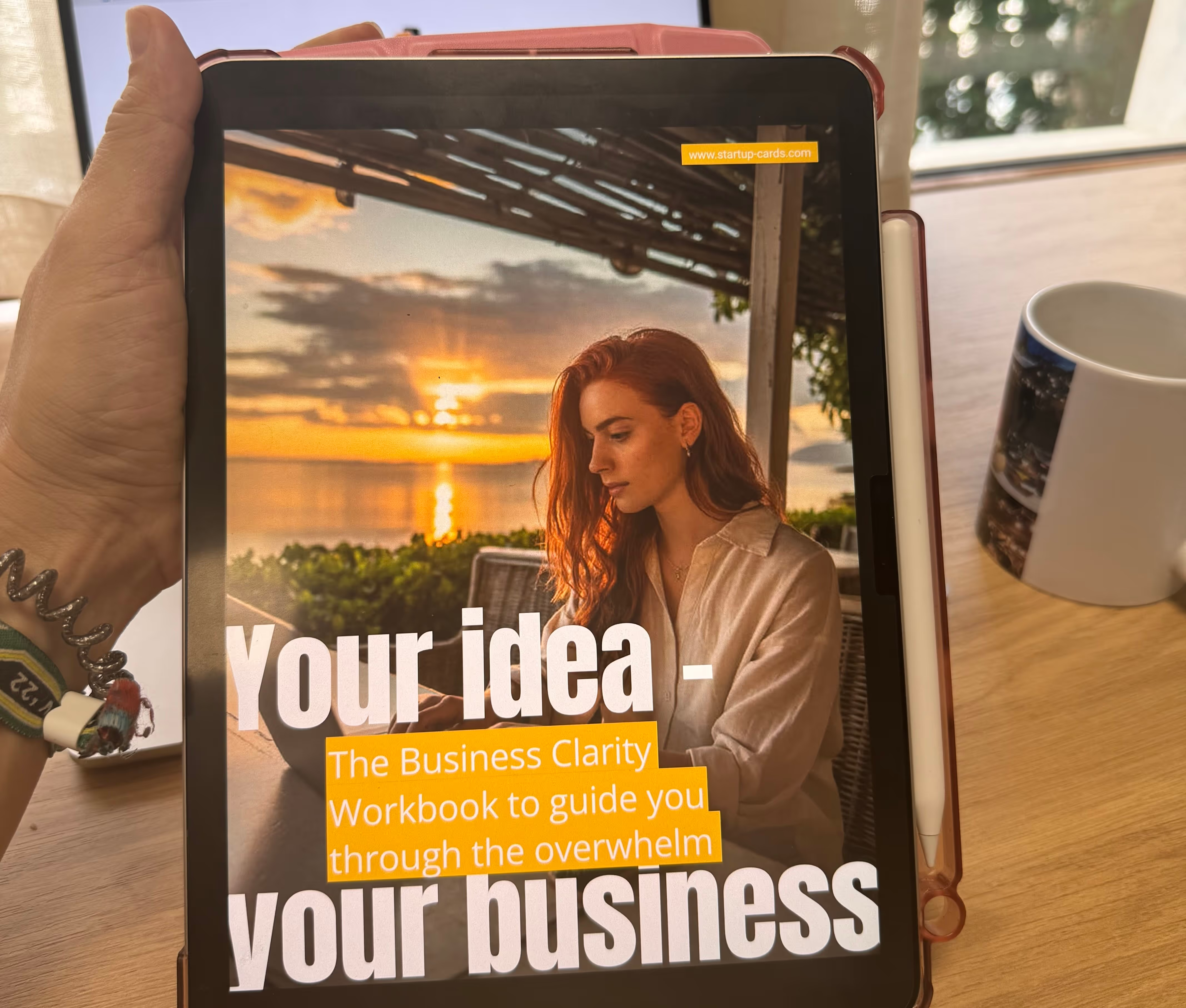
Every version of StartupCards gives you the same core: a guided sequence of 41 questions, a video walkthrough for every card, and clarity on whether your idea actually works as a business. By the time you finish, you’ll have a complete, internally-consistent business model — built around your idea, in your own words.
The videos don’t just explain the cards. They walk you through real examples across almost every kind of business model — service, product, app, platform, physical goods — so you can see what each card looks like in practice for businesses that aren’t yours. The course already includes a wide range of examples, and I’m adding new ones over time.
What changes between versions is the format — and whether you want me on a call with you at the end.
This isn’t a generic coaching call. By the time we talk, you’ve already worked through the deck — your problem, your target group, your numbers, your assumptions are all documented. I review your complete business model before the session, then we spend 45 minutes on exactly where it isn’t working yet. You leave with specific decisions, not notes.
Most founders never get this kind of session — the people I usually do this work with are pitching on national television or negotiating 6 to 7-figure investment rounds. If you want my eyes on your business model specifically, this is how.
If you decide it isn’t right for you before the session, you get a full refund. If we’ve already done the call, the work is done.

My full pre-launch checklist PDF — it sells separately for €29.

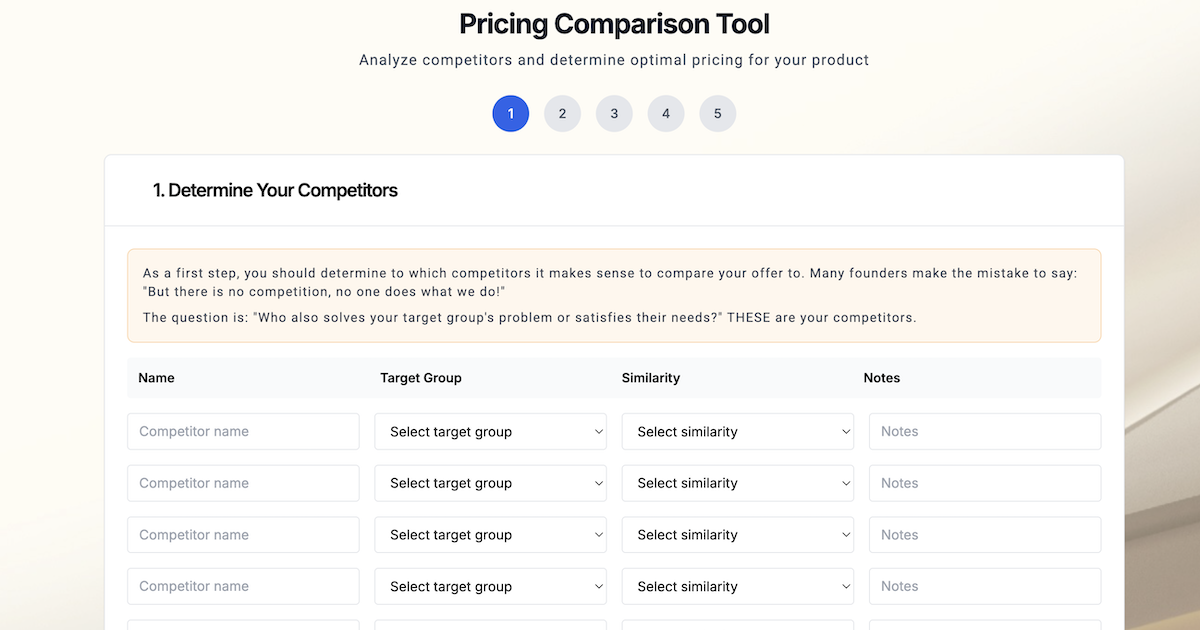
The digital version of Cards 24–26. It walks you through the competitor-based pricing approach step by step, then gives you a clear overview to land on your price. No more guessing.
You have 30 days to decide if this works for you.
If you go through the first 10 cards and don’t feel you’re making real progress on your business model — email me and I’ll refund you in full. No questions asked, no forms to fill out.
I built the deck because the founders I’ve watched build real businesses all answered the same questions, in the same order. If that’s not happening for you, you shouldn’t have to pay for it.
That’s the question, isn’t it. You’re not worried about whether the cards work. You’re worried about whether you’ll do what you did with the last three things — pay €179, get excited, do the first part, hit the third Tuesday, quietly close the tab. Another tombstone in the pile.
So here’s what it actually feels like, card by card.
You start with a small stack and an empty page. Card 1 asks you one question. You answer it. You write it down on the card. That’s done. You put the card aside. The stack on your left has one card. The stack on your right is one shorter.
That’s the unit. One question. One answer. One thing you keep. Forty more times.
By the time you’ve stacked six or seven cards on the left, something starts to shift. You can feel the weight of decisions you’ve actually made — not opinions, not research bookmarks, decisions. By Card 9, your Target Group is locked in. That’s a milestone, and it sits in your hand.
You keep going. Then on Card 10, the deck does something the courses you bought never did. It stops you. It says: “Look at the problem you set out to solve. Now look at the target group you just defined. Do they actually fit?”
Sometimes it does. You move on with the small grin you get when a piece slides into place. Sometimes it doesn’t. The deck tells you exactly which card to go back to. You sit with it. You change one thing. You walk forward again. And this time, it clicks.
That moment — the click — is the part no course can give you. Most courses pretend everything’s linear and leave you to find the contradictions a year later — when you’ve run ten different ads, none of them made you a single sale, and you can’t tell where the problem is. The cards put the contradictions in front of you while there’s still time to fix them. The loops aren’t a setback. They’re the reason it works. They’re also the reason finishing feels good — every loop you close is a piece of your business locking into place.
By Card 19 — the half-way mark — the Triangle is locked: Target Group, Problem, Solution, all three fitting together. That’s not a worksheet completion. That’s a business model that actually holds. It’s the part most founders skip. The deck won’t let you.
And if life eats your summer and you stop at Card 19, you don’t have nothing. You have a complete Triangle on your desk — the foundation that most “researched for a year” founders still don’t have. Whenever you come back, Card 20 is right where you left it.
You won’t stop there, though, because by Card 19 you’ll want the rest. Pricing. Lifetime value. Margin. Customer acquisition costs. Card 35 is where it all comes together into a Result card you’ll keep — your business, on one page, in your own handwriting.
Anna walks the deck next to you the whole time. Working mom from a design agency, two years of carrying her idea. You see her get stuck on the same cards you get stuck on. You see what she does. You see her idea change by the time she hits the Triangle. The narrative pulls you forward — you don’t quit halfway through a story you’re invested in.
The 30-day guarantee is there if you need it. If the first ten cards don’t have you moving forward in a way the other things didn’t, email me. Full refund. No forms.
But you’re going to finish. Not because you’ll suddenly have more discipline than last time — you won’t need to. Because this time, the thing in front of you was finally built to be finished.
I’d rather you not buy this and stay friends than buy it, find out it isn’t for you, and quietly hold it against me. Here’s how to tell.
If you saw yourself in the first list — you’re in the right place. Let’s keep going.
Yes. The cards are built around the questions every business model has to answer — service, product, app, platform, physical goods. What changes across business types is how you answer specific cards, not which cards apply.
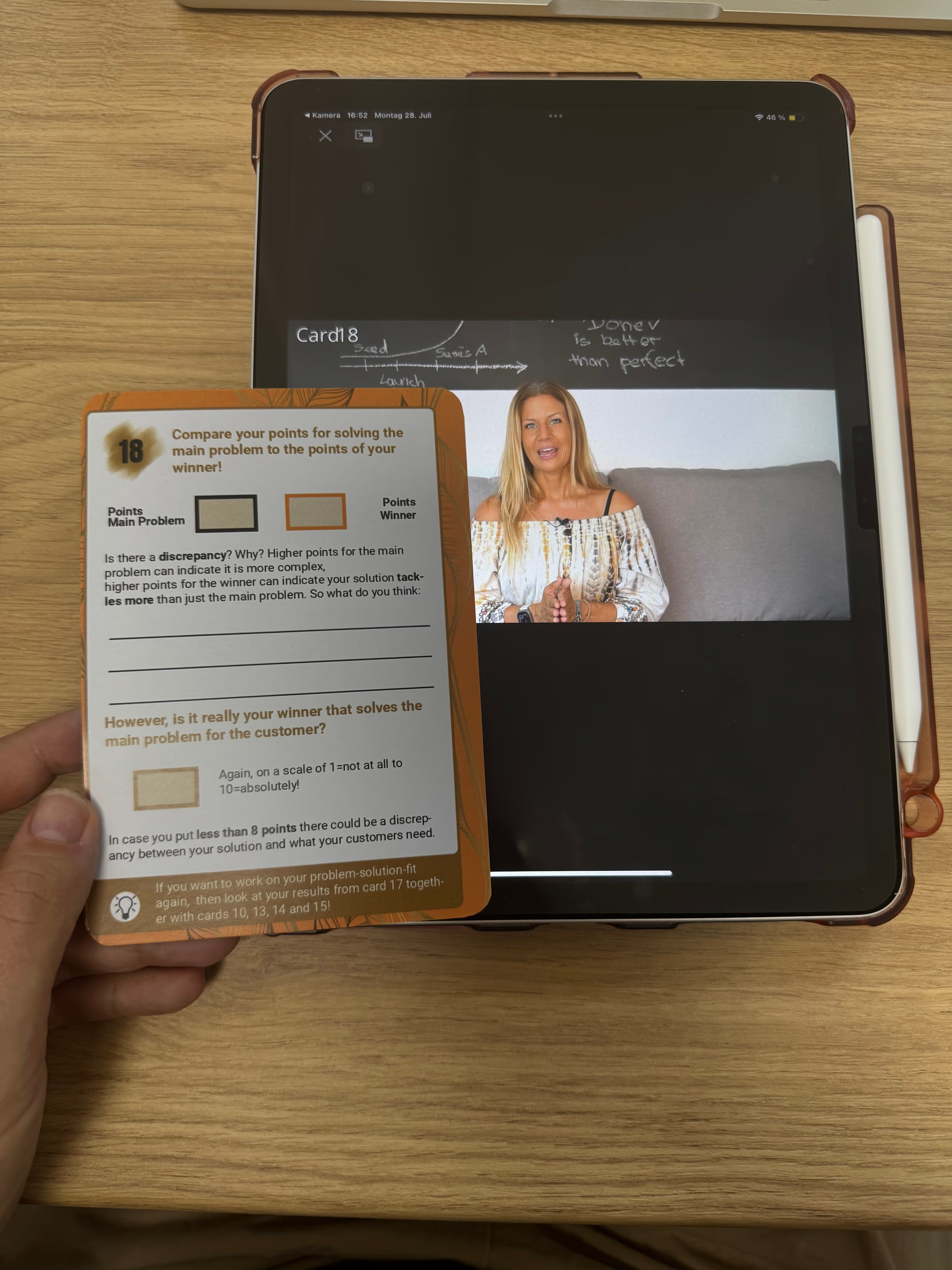
The video walkthrough on each card shows examples across all of these. When you hit Card 14 (Problem-Solution Fit), you see how it plays out for a service, a physical product, an app, a platform — and you anchor on whichever is closest to yours.
The cards work for the engineer building SaaS, the nurse starting a private practice, the teacher launching a tutoring platform, the parent on leave with a physical-product idea. The shape of the deck doesn’t change. Only your answers do.
As much or as little as you need. Some cards take ten minutes. Some take an afternoon. Some you’ll come back to three times before you’re satisfied with the answer.
There’s no clock. The deck doesn’t expire. Run it over a weekend, a month, or six months — whatever fits the life you’re already living. What matters more than total time is rhythm: doing one card, sitting with it, then coming back. Some of the best decisions happen in the gap between cards — walking to the bus, in the shower.
Power through all 41 in one sitting and the answers won’t be honest. Do one card every few days and you keep momentum and finish with something real.
Yes — and the fact that you’re asking is actually a sign you’re going to do well with this.
Most people who say “I’m not a numbers person” aren’t bad at numbers. They’ve been taught that business numbers are intimidating, abstract, and reserved for people with MBAs. None of that’s true.
The numbers section doesn’t start until Card 21 — after you’ve locked your Target Group, your Problem-Solution Fit, and the Triangle. By the time you get there, you’re answering one practical question at a time: How will I make money? What does it cost to make one of these? What can I realistically charge? How many customers do I need? Each card is a single calculation a teenager could do — applied to your business, with your numbers and your assumptions on the table.
Every numbers card has a video walkthrough. There’s also a separate Pricing Tool that walks you through pricing step by step. By Card 35, you’ll understand the unit economics of your business better than most founders ever do.
Two things are built in.
First, every card has a video walkthrough — me, on camera, walking through the card and showing real examples across different business types. If a card isn’t making sense, the video usually does.
Second, the deck is designed to handle stuck-ness. If you’re stuck on a numbers card, it often means a target-group or solution decision earlier in the deck isn’t sharp enough yet — and the card tells you exactly which one to go back to. Stuck isn’t failure. It’s the deck catching a gap while there’s still time to fix it.
If you’re truly blocked, you can also book the 1:1 review session (the Digital + 1:1 tier). That’s exactly what it’s for — working through the spots where your business model isn’t holding together yet.
Yes, and I’d actively encourage it.
If you have a co-founder, do the cards together — but each of you fills in your own copy first, separately, then you compare. The cards where you disagree are the most valuable cards in the deck. That’s where the real conversations happen.
If you have a spouse, partner, or close friend who’s going to be affected by this business (financially, emotionally, time-wise), running them through even a few key cards — Card 3 (Big Vision), Card 9 (Target Group), Card 21 (Making Money) — gets them on the same page about what you’re actually building. That conversation is one of the things founders most avoid and most need.
Accountability buddy works too. One card a week, a short voice memo or call after each one. Saying the answer out loud to another person makes the answer sharper.
Yes — and it’s one of the best things you can do with the deck if you’re torn between two. Pick the one you feel strongest about and run it through to the Triangle (Card 19). Stop. Then start over with the second idea and take that one to Card 19 too. Lay both sets of cards next to each other and you can see which model fits together more honestly. If they’re close, keep going into the numbers (Cards 21–35) and let the unit economics decide. Most founders walk in convinced idea A is obviously stronger — and walk out either with idea B, or with a hybrid neither one started as.
That’s a real answer, and one of the most valuable outcomes the deck can give you.
If you work honestly through the cards and your business model can’t hold itself together — the numbers don’t work, the target group can’t be reached affordably, the solution doesn’t actually solve the problem at a price anyone will pay — that’s the deck doing what it’s meant to do. It just saved you two years of your life and most of your savings.
You walk out with two things instead of nothing: a precise understanding of why this idea didn’t work (rarer than you’d think), and a much sharper sense of what an idea that would work looks like for you. Most founders who reach that conclusion don’t quit. They come back six months later with an evolved version of the same idea — or with something new — and run it through again. The second time, it holds.
The cards don’t kill ideas. They surface the ones that weren’t going to make it anyway, before you’ve poured your savings into proving it the expensive way.
The work is the same. The format is different — and the difference matters more than it sounds.
Digital gives you the full deck as a printable PDF (A6 format, so you can print and cut them yourself if you want), plus the interactive version inside the online course where you fill in your answers directly. Same questions, same videos, same result at the end.
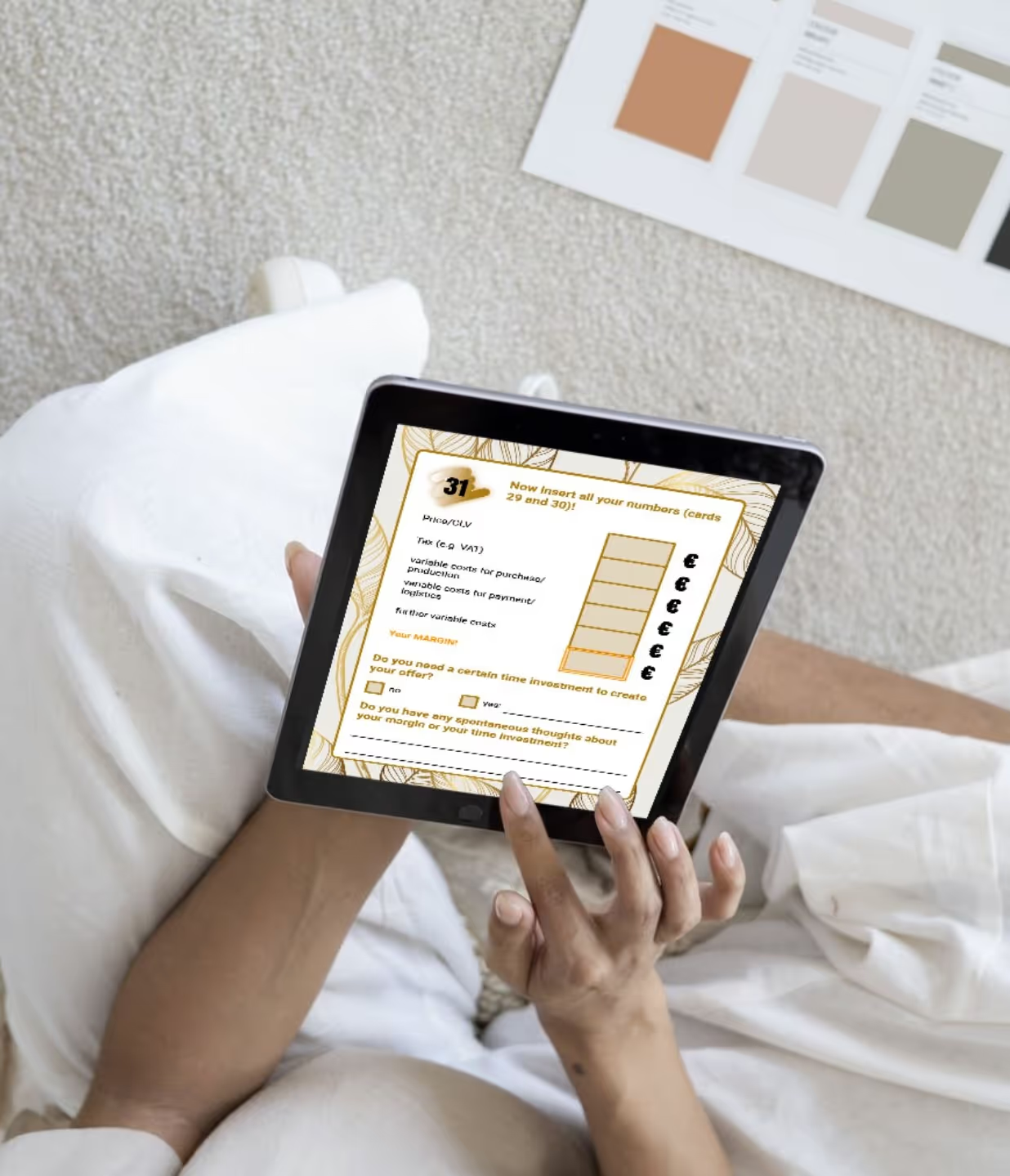
Complete is everything in Digital plus the physical 41-card deck — printed, boxed, and sent to you. The cards are designed to be handled: laid out on a table, stacked on the left as you finish them, written on with a pen. And the milestone cards are made to go up on a wall or whiteboard as you reach them — not at the end, but one by one, as you work. Card 9 done: your target group goes up. Card 19 done: the Triangle joins it. By the time you’re into the numbers, your whole business model is assembling itself on the wall in front of you, piece fitting into piece. Beta testers loved watching it come together this way.
Honest take: the physical deck changes the experience more than people expect. There’s something about closing a card and putting it on the “done” pile that a screen doesn’t replicate — and a business model growing on your wall is a very different feeling from one saved in a browser tab. If you prefer to work with something physical, the physical deck is what I’d pick.
That said, Digital is fully complete on its own. Founders have finished the deck and built real businesses on it without ever touching a physical card. If you want to start today, Digital is the move.
Right now, English. German is in production — the cards, the videos, the workbook, the Pricing Tool — and will launch later. If you want to be notified when the German version is ready, sign up for the newsletter and we’ll send you a heads-up. Other languages depend on demand — let us know if there’s one you want.
It’s a single one-time payment. No subscription, no recurring charges, nothing to cancel later — you pay once and the deck is yours.
Any updates, expansions, or new video walkthroughs added over time are included free — you won’t be charged again. It’s not a 12-month subscription in disguise, and it’s not “access for the lifetime of a platform” that quietly disappears in two years.
Yes. Buy the version you want to gift, then send us an email at mail@startup-cards.de with the recipient’s details so we register the access under their account instead of yours. Done.
You’ve read this whole page. Most people don’t. That tells you something — some part of you has already decided this matters.
So here’s the honest version of where you are.
Twelve months from now, you will be twelve months older. That part isn’t up to you. What is up to you is what you’re holding when you get there.
One version: twelve months from now, someone asks how the idea is going. You give the same vague half-answer you gave last time, and the time before that — because nothing moved. The idea is still an idea. The tabs are still open. The savings are a little thinner. And the quiet thought is back: this will never happen if I go on like this.
The other version: twelve months from now, someone asks how the idea is going — and you have an answer. You know who your customer is. You know what you’re selling and why it’s different. You know your numbers — what it costs, what you charge, what you keep. You know whether this is a real business, because you tested it against the same questions investors ask, in the right order, one card at a time. Maybe it’s running. Maybe you found out it wasn’t the one — and you’re free and clear, instead of two years and a chunk of savings deeper into the wrong thing.
Both of those years take exactly the same amount of time to live. The only difference is whether, somewhere in the next few weeks, you sat down and started.
That’s the honest urgency. Not a countdown timer. Not a disappearing discount. Just the plain fact that the year is moving, and right now you’re spending it the same way you spent the last one.
“A year from now you may wish you had started today.”Karen Lamb
You don’t need a Rolex. You don’t need an MBA. You don’t need to be the loudest person in the room, or to have it all figured out first. You need the questions, in the right order, and the honesty to answer them. That’s 41 cards. It starts at €179. It’s on the other side of one click.
Start the sequence.
Pick your version — 30-day money-back guarantee